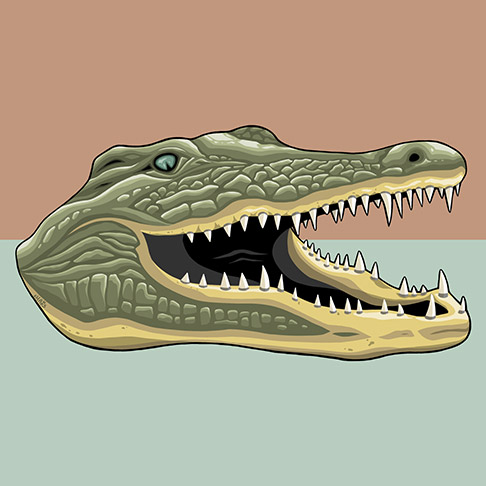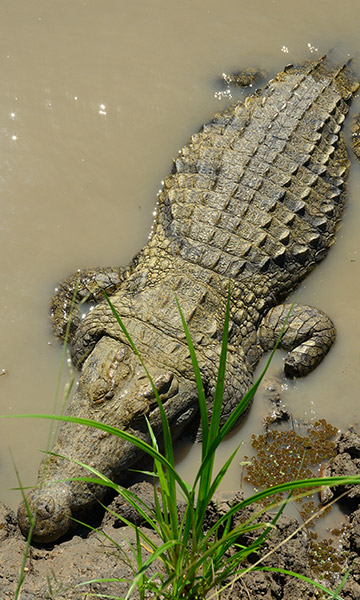
Within Africa, the Nile crocodile Crocodylus niloticus (Laurenti 1768), is one of five currently recognised crocodilian species. The species is found in 26 countries, from Egypt down to South Africa (Iseburg et al. 2019). The Nile crocodile was previously considered a single species but recent studies have clarified there are 2 distinct lineages: the Nile crocodile (C. niloticus) and the African crocodile (C. suchus), found in West and Central Africa. This distinction was made through phylogenetic analysis of mitochondrial and nuclear markers (Cunningham et al. 2016; Hekkala et al. 2011). For permitting purposes, Crocodylus niloticus is used across the entirety of its range. There are no currently recognised subspecies since C. suchus has been elevated to species level. There is evidence of biogeographical structuring based on mitochondrial DNA and microsatellite data within C. niloticus following the major river basins across northern, eastern, and southern Africa (van Asch et al. 2019; Versfeld 2016). This assessment used genetic evidence as the basis for naming two Evolutionarily Significant Units (ESUs) within Africa, and assigning eight Genetic Management Units (GMUs) within those. Figure 1 visualises these ESUs and GMUs across Africa.
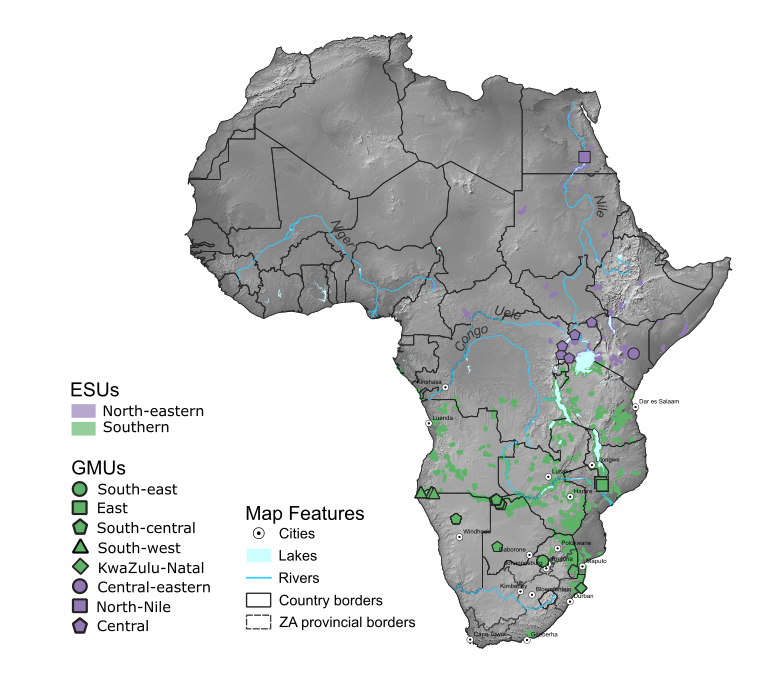

The guidelines provided in this document are based on genetic data translated into the Evolutionarily Significant Units (ESUs) and Genetic Management Units (GMUs) listed below.
See Figure 1 for visual representation and figure legend for more detail.
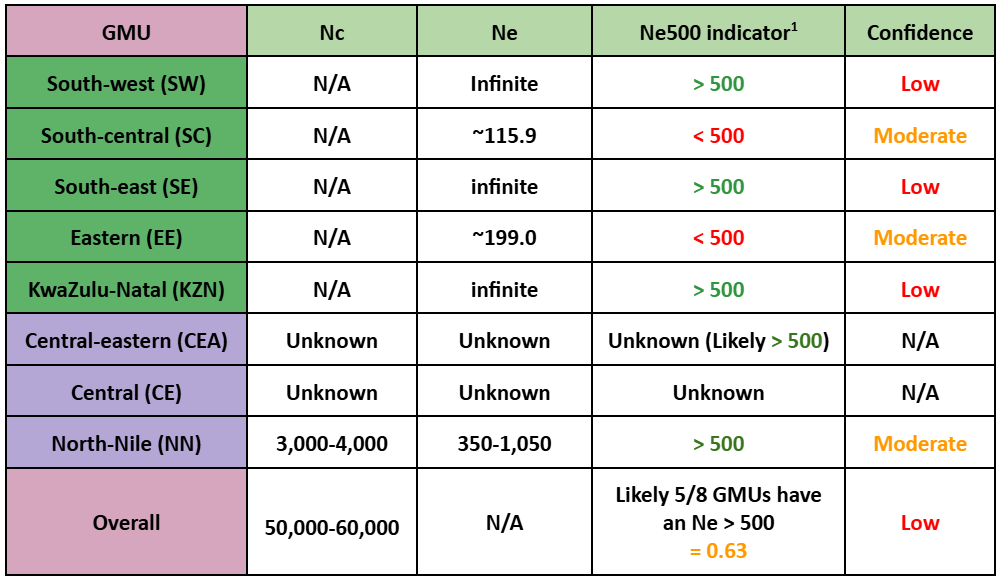
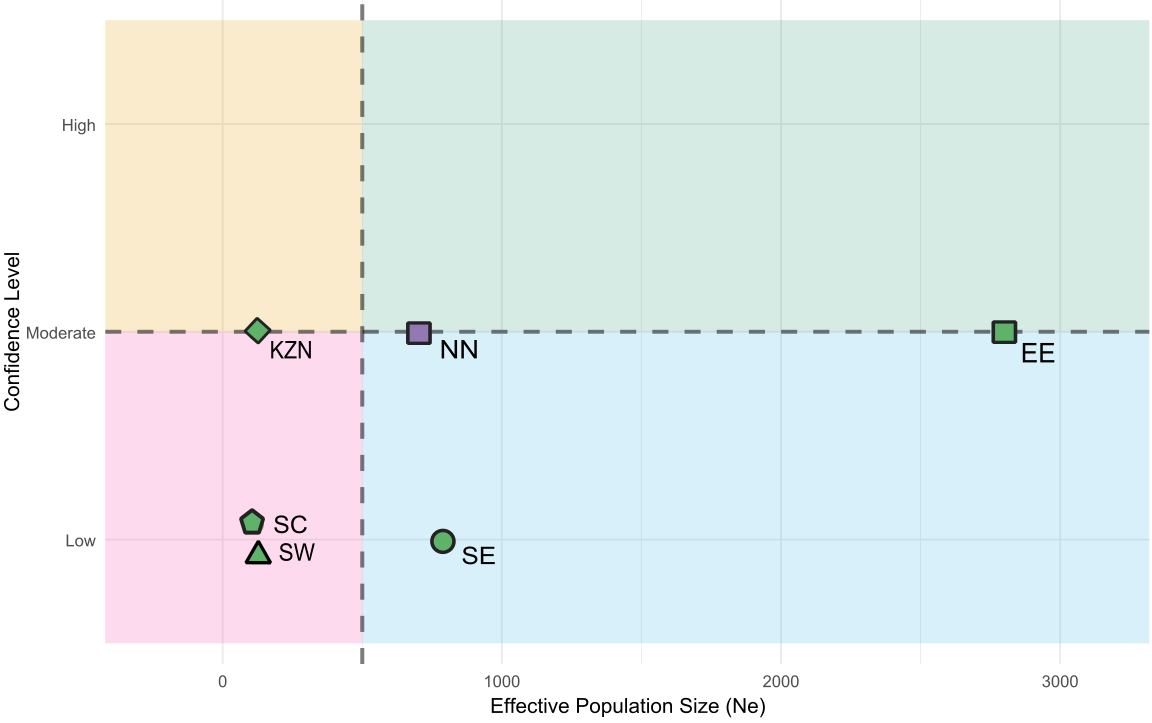
Based on Ne500, the GMUs within the southern ESU are most at risk. GMUs with Ne < 500 are highly susceptible to rapid loss of genetic diversity and are at high risk of extinction due to genetic threats. The north-eastern GMUs are understudied and more information is needed both on their genetics and numbers to be able to confidently calculate Ne500 either through genetic data or census size. Figure 2 summarises findings.
Confidence levels are supported by data from recent genomic studies (van Asch et al. 2019; Versfeld 2016), IUCN data on populations from within the last decade (Iseburg et al. 2019), and conservation surveys (Combrink et al. 2019). Large portions of the range are still lacking data on population numbers of Nile crocodile (such as Sudan, South Sudan, and other areas of the northern distribution) and available information does not provide a full picture of their numbers for many areas due to the study and survey limitations (SW, SE, and SC GMUs).
1 Proportion of populations within species with an effective population size (Ne) greater than 500
(https://www.gbf-indicators.org/metadata/headline/A-4)
2 Proportion of populations maintained within species
(https://ccgenetics.github.io/guidelines-genetic-diversity-indicators/docs/2_Theoretical_background/PM-indicator.html)

If you have any additional questions related to these guidelines, please contact ConGen Africa at info@congenafrica.com.